
Distribution
Stop translating your Instagram for Xiaohongshu
By PostSteer13 min
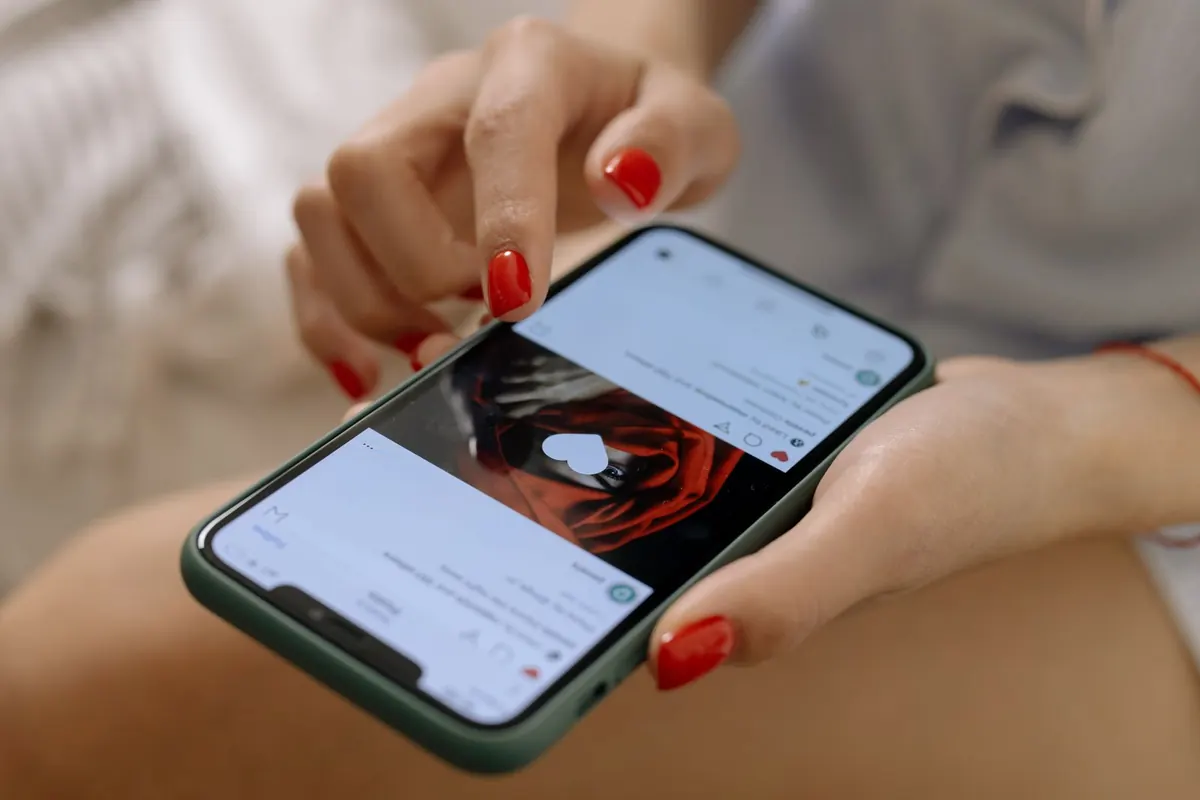
Xiaohongshu marketing is notes written in Chinese, found through search and answered in the comments. Open the right account, publish fifteen to twenty notes, then pay for reach.
Xiaohongshu marketing means publishing useful image notes in Chinese that people find through search, then answering the comments that follow. Most brands open a verified business account, build a small library of notes before paying for anything, and let customers do the recommending.
Xiaohongshu is also called RedNote and Little Red Book. Guides describe it as a place people go to research a purchase. That makes it closer to a review shelf than a feed, and it changes what a brand should post.
What follows is the order we would do it in. What the app is, which account to open, how search decides who sees a note, what a note looks like, how many to publish before paying anyone, and a first month you can start on Monday.

What Xiaohongshu is, and who is on it
Xiaohongshu means Little Red Book. The app is owned by Shanghai-based Xingyin Information Technology, according to Radio Free Asia's reporting from January 2025. Outside China it goes by RedNote.
People post image notes and short videos about things they have tried. Restaurants, skincare, travel, flats, schools. Other people search, save the notes and ask questions underneath.
Nobody agrees on the size. Radio Free Asia put it at about 300 million users before the January 2025 rush. EC Innovations, citing Statista, gives roughly 234 million monthly active users in China as of September 2025. Those measure different things. Treat both as the right order of magnitude and neither as a target.
That January, a person close to the company told Reuters that more than 700,000 new users had joined, as Americans looked for somewhere to go ahead of the TikTok deadline. The wave made the app famous in English. The customers a business is chasing are mostly the ones who were already there, and they read and write in Chinese.
The app is moderated. Radio Free Asia reports users banned over what they posted. Read the community rules before the first note goes up, because an account you spent a quarter building is not worth risking on a topic you did not need to touch.
- Also called
- RedNote, Little Red Book
- Owner
- Xingyin Information Technology, Shanghai
- Main formats
- Image notes and short video
- Audience language
- Chinese
Which Xiaohongshu account to open
There are two routes. A personal account is quick to make. A business account takes paperwork. Choose by what you need the account to do.
Guides describe the business account as the one with the verification badge, a business information card and access to a store in the app's mall. The badge is what tells a stranger that the brand is the brand.
The paperwork is the slow part. EC Innovations lists business licences or registration papers and trademark or brand authorisation letters. Meetsocial adds an authorised representative's credentials, and says Southeast Asian brands should budget four to eight weeks from submission. Other guides quote far shorter waits, and they disagree about the fee and the phone number you need.
That disagreement is useful. It tells you the rules move. Check the live requirements in the app before anybody promises you a date.
A store is a separate step again. A second application, a second set of rules. Do the brand account first and treat the store as a decision for later.
The waiting is the reason to start the notes now. They are the slow work, and they do not depend on the badge.
How Xiaohongshu search decides who sees a note
Followers matter less here than they do anywhere else you post. Meetsocial reports that 80 per cent of post views come from people who do not follow the account. It credits the figure to its own analysis of aggregated campaign and KOL performance data, so read it as a description of the campaigns it runs rather than of the whole platform.
Even so, the direction is plain. A new account with no audience can still be found, because the notes are matched to what people type. EC Innovations says the search rewards relevant keywords and hashtags in captions and tags.
So the first job is a keyword map. Open the search bar in the app and type what you sell, in Chinese. The suggestions underneath are what people actually type. Write down twenty.
Then read the top notes for each phrase. Look at the covers. What do they promise, and to whom. A note titled the way a stranger phrases the question beats one titled the way you describe the product.
This is the part that is hard to do from outside the language. A translated keyword is a guess. A suggestion typed by a real searcher is not.
What a Xiaohongshu note looks like
Start with the cover, because it does almost all of the work. In the grid it is a thumbnail with a headline on it. You have the width of a thumb.
Hashmeta's note-writing framework recommends vertical covers at a three by four ratio, at least 1080 by 1440 pixels. Text on the cover is essential in its view, and the formula is a number, a specific outcome and who it is for. Bold sans-serif Chinese type that stays readable when small.
The text underneath is short. Hashmeta suggests 300 to 800 Chinese characters, with the answer in the first three lines, and a closing question or a prompt to save the note. Titles are short enough that you only get one idea.
One guide we read warns that overly professional photography looks like advertising. Clear, well lit and taken by a competent amateur is the target. That is a relief for a small business, because it is the photography you already have.
The language is where most brands fail. A translated English post reads like a translated English post. This is also why cross-posting does not work here. An Instagram caption run through software is still an Instagram caption.
Hashmeta recommends eight to fifteen hashtags in three tiers. A few broad, several niche, two or three branded. That is more than most platforms want, so check it against the notes doing well in your own category before you copy it.
Before any note goes up.
- The cover. Can it be read at thumbnail size.
- The title. Does it say who it is for and what they get.
- The first three lines. Is the answer already there.
- The keyword. Is the phrase from your map in the title and the body.
- The last line. Is there a question a reader would want to answer.
What to write about on Xiaohongshu
Meetsocial's suggested mix for the first sixty days has four parts. Product showcases, the story of where the brand came from, the product in somebody's ordinary life, and educational notes that answer questions about the category.
Rank them by how often a stranger would search for them. Nobody searches for your origin story. Plenty of people search for how to choose between two things you happen to sell.
So lead with the educational notes. Each one is an answer to a phrase on the keyword map, and each one is a reason to trust you before you have asked for anything. The product showcase comes second, once the reader already believes you know the category.
The origin story is for the profile and one note near the start. It is not a series.
Keep a list of the questions your customers ask in a week. Every one of them is a note. If the same question arrives three times, it is a note with a cover, a keyword and a closing question of its own.
Drop the idea that a note has to be clever. Plain is fine. Solve something small, show it clearly and stop.
How many notes before you pay for anything
Meetsocial recommends 15 to 20 high-quality posts before investing significantly in paid amplification. Hashmeta gives rates. Four to five notes a week for the first two months, three to four a week for months three to six, then two to three a week at minimum.
Publish fifteen to twenty good notes before you pay anyone to push them. The number is Meetsocial's and the reasoning holds. Paid reach sends strangers to your profile, and a profile with three notes tells them nothing.
The cost is time, and it is the honest half of the advice. At Hashmeta's four notes a week, the library takes four to five weeks. At one a week it takes fifteen to twenty weeks, which is most of half a year.
Hashmeta's pace is a lot for a business with a day job. One a week is what most can keep. So the pipeline matters more than the pace, and the pipeline is one batch a month. Write the month in one sitting, approve it, and let it go out a note at a time.
A steady one a week for five months beats four a week for three weeks and then silence. The profile a customer opens at the end of that is the same either way.
- Library before paid reach
- Fifteen to twenty notes
- At four a week
- Four to five weeks
- At one a week
- Fifteen to twenty weeks
- Whose numbers
- Meetsocial and Hashmeta

Creators, KOCs and the comments underneath
A KOL is a large creator. A KOC is closer to an ordinary customer with an audience. Meetsocial puts the KOC range at 1,000 to 50,000 followers, which is a person a small brand can actually reach.
The big numbers belong to the big names. Daxue Consulting tells one case, from Miro Li of Double V Consulting, in which about 80 per cent of the traffic at a store launch came from KOLs. It is one brand, told by someone who works in the field. Read it as a possibility, not a forecast.
Start with the smaller creators. They cost less, they are easier to brief, and a note from someone with 5,000 followers who clearly used the product carries more than a banner.
Then the comments. Meetsocial suggests replying to messages within two to four hours in business hours. Hashmeta says within two hours for comments. Both are agency numbers and both make the same point.
A person who asks a question under a note is a customer in the middle of deciding. Answer in Chinese, the same day.
That means somebody on your side who reads Chinese. Plan for it before the first note, not after the first question. A brand that posts well and answers three days later has done the hard part and thrown it away.

A first thirty days, in order
The pages ranking for this term explain what to do and stop before when. Here is a month. It assumes one note a week at the end of it, which is the pace most businesses can hold.
The method is the same one behind any content calendar for social media. Decide the topics first, make them in a batch, and publish from the batch. The difference is that the topics here come out of the search bar, not out of your head.
Four weeks.
- Week one. Build the keyword map of twenty search phrases. Read what the top notes promise. Start the business paperwork if you want the badge.
- Week two. Choose ten note topics, each one an answer to a phrase on the map. Approve the list before anything is made.
- Week three. Make the first four notes. Covers first, then text, then the rest of the images.
- Week four. Publish one. Read the comments and answer every one. Adjust the next three from what people asked.
Where we fit
Chinese social media posts covers the writing and the design. A Chinese-language writer and a designer make the cover, the images and the text from a ten minute brief. You approve the month's topics first.
We hand over the finished set and you publish from your own account. We do not ask for your login, and we never hold it.
It is quoted from a brief, not sold off a price list, so there is no figure to put here. The rest of the services have their prices up front.
Xiaohongshu is a good place to be found and a poor place to be the only place you are found. Your own site is where the person who liked the note ends up, which is why a website still matters even with a busy profile.
Keep one thing from all of this. The cover is read at the size of a thumb, in a language the searcher chose, by someone who is deciding whether to trust you. Make that small square worth the trust.
Questions people ask
- What is Xiaohongshu used for?
- People use it to research things before they buy them and to share what they tried. They post image notes and short videos about food, skincare, travel and homes, then search, save and ask questions under other people's notes. For a business that makes it a place to be found by someone already looking.
- Is Xiaohongshu the same as RedNote?
- Yes. Xiaohongshu is the Chinese name and it translates as Little Red Book. RedNote is the name the app uses outside China.
- Can a foreign business open a Xiaohongshu business account?
- Yes. Guides list business registration papers, trademark or brand authorisation documents and an authorised representative's credentials. The exact requirements differ between sources and change, so check the live rules in the app before you start.
- How long does Xiaohongshu business verification take?
- Sources disagree. Meetsocial tells Southeast Asian brands to budget four to eight weeks from submission, and other guides quote far shorter waits. Start the notes while the paperwork is pending, because the notes are the slower work.
- Do I have to post in Chinese on Xiaohongshu?
- For customers in China, yes. They search and read in Chinese, and a translated English post reads like one. Write the notes in Chinese from the brief, starting from the phrases real searchers type.
- How many notes should I publish before running ads on Xiaohongshu?
- Meetsocial recommends 15 to 20 high-quality posts before significant paid amplification. At four a week that library takes four to five weeks. At one a week it takes fifteen to twenty weeks, so a monthly batch is what keeps the pace going.
More posts
- A content calendar is a supply problem3 October 2026
- Nobody put your Short in jail3 October 2026
- Everyone who answers this question sells websites2 October 2026
- Nobody on the roster is holding the camera1 October 2026
- The same file on every platform is four bad posts30 September 2026
- One recording a month is enough12 September 2026
- Captions are doing more work than your edit28 August 2026
- Editing is the easy half. Posting is where it dies.14 August 2026